
The most important item a person needs when leaving prison is some form of identification. It can be a state-issued ID or a driver license, both of which are required for just about every task imaginable, including opening a bank account, securing housing, and getting a job.
“Having a driver license or ID upon release from prison is foundational for every part of reentry. You can’t do anything without some sort of ID,” said NC Department of Adult Correction Secretary Leslie Cooley Dismukes. “Providing it to people to make sure everyone’s got it helps us ensure the first step in reentry success.”
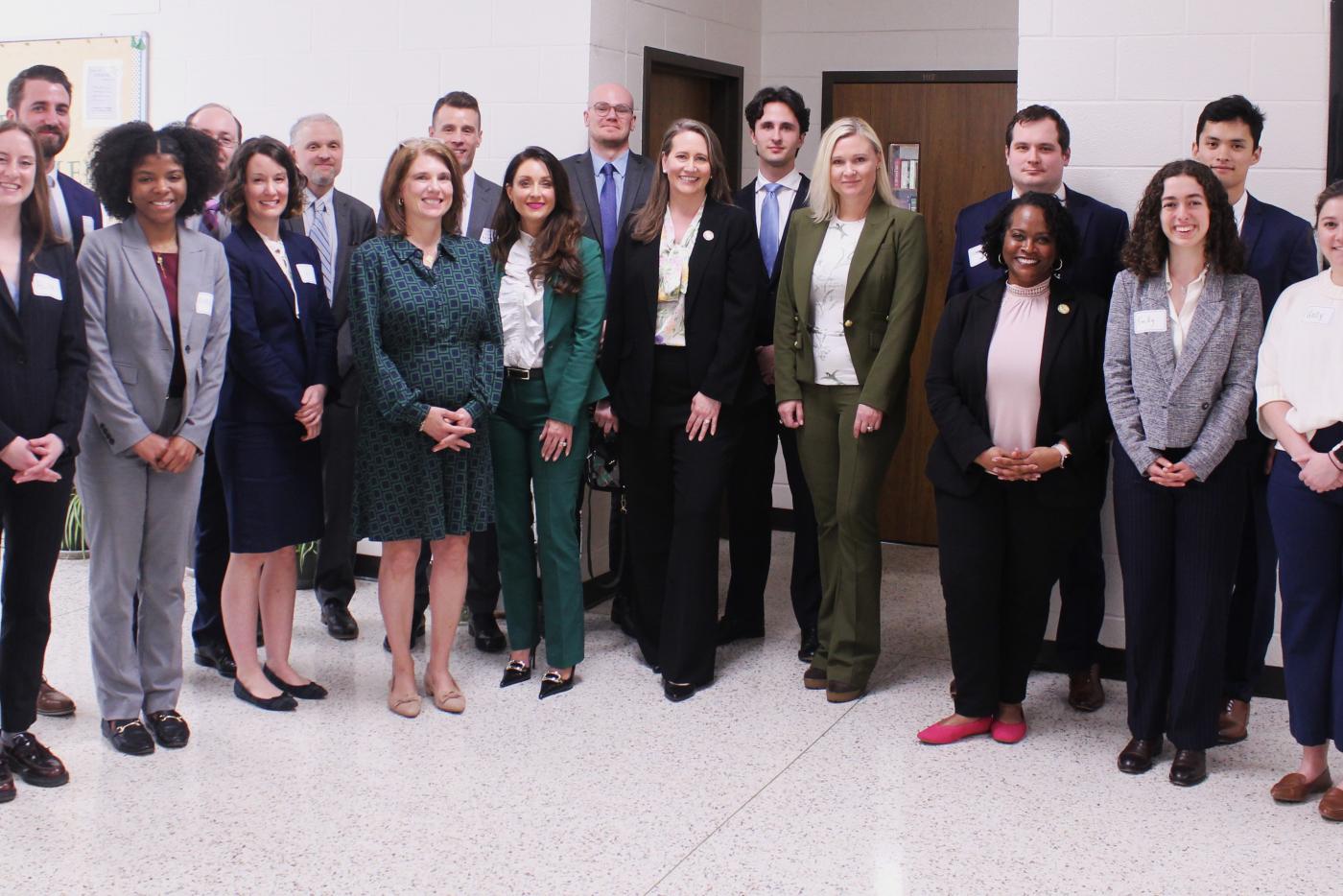
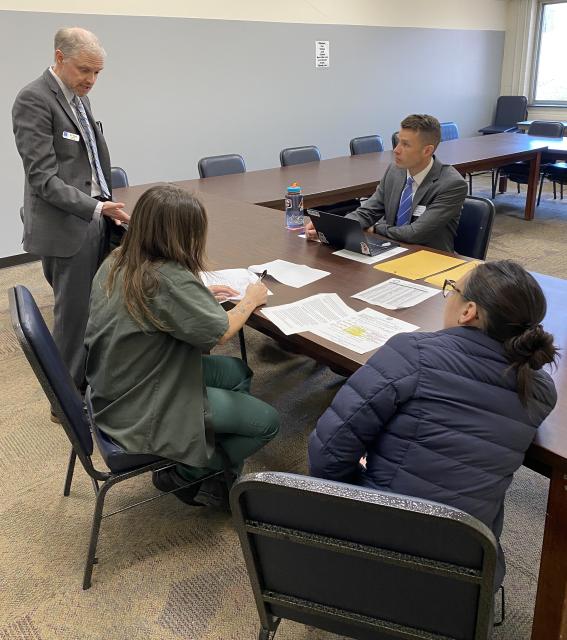
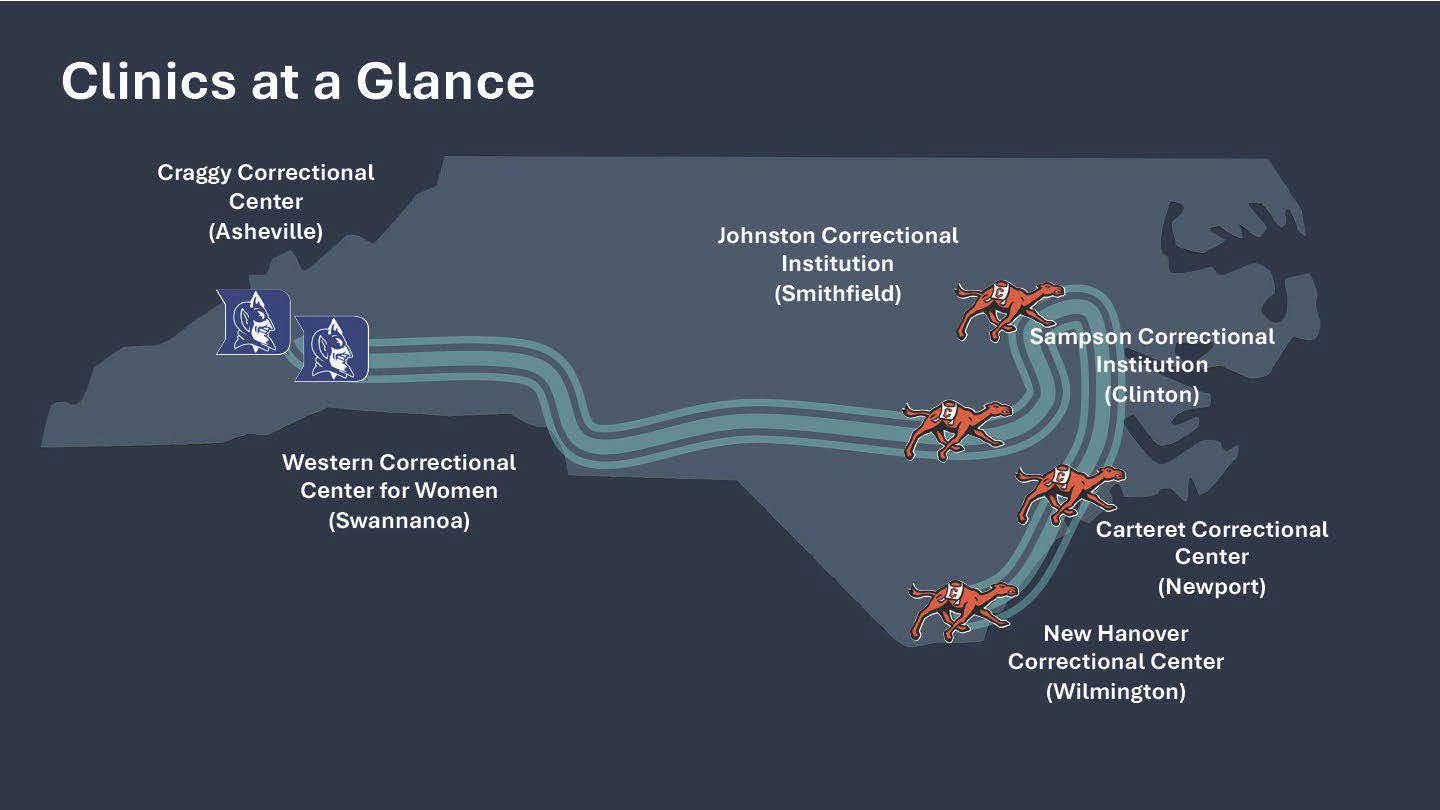
There are no “second chances” without an official identification. In some cases, there are also no “first chances” without assistance from people who care. This past March, thanks to Duke Law School’s Pro Bono Program and Pisgah Legal Services, 65 soon-to-be-released people in NCDAC custody at the Western Correctional Center for Women in Swannanoa and Craggy Correctional Center in Asheville had the opportunity to participate in a driver license restoration (DLR) clinic to have their driving records reviewed and receive legal advice on processes to get their licenses back after they leave prison.
“I have to have a driver license when I get out,” said Brentley Harmer, a resident at Western Correctional Center for Women. “If I don’t have one, I don’t know how I will be able to get around. I am thankful to be able to speak with the law students and lawyers to see how I can get my license back.”
This is not the first time NCDAC facilities have hosted law school students in driver license restoration clinics. Campbell University School of Law’s Blanchard Community Law Clinic conducted DLR clinics at Carteret Correctional Center, Sampson Correctional Institution, Johnston Correctional Institution and New Hanover Correction Center.
It’s also not the first time the Duke Law School Pro Bono Program has conducted DLR clinics, but it is the first time law students have been in a facility. Last fall, Duke and Pisgah Legal Services did a “hybrid” clinic at WCCW where the students held virtual appointments with people in NCDAC custody under the supervision of attorneys who were onsite at the facility.
“Our students have had an amazing time being part of this unique collaboration between law schools, legal service providers, and state agencies,” said D.J. Dore, supervising attorney and Director of Duke Law School’s Pro Bono Program. “I commend Secretary Dismukes for prioritizing driver license restoration as a tool of reentry, and I am thankful to the NCDAC Division of Rehabilitation and Reentry for all the admin and logistics support they provided us to make this work possible.”
Supervising attorney Ed Treat of Pisgah Legal Services and other attorneys were on hand with the law students for the appointments. Interested people in NCDAC custody signed up ahead of time and their driving records were provided by the Division of Motor Vehicles.
Treat, a former prosecutor in New York City, has been doing driver license restoration and criminal record expunction in western North Carolina since 2021 and, in his words, “I had to learn as I went along.” He had the opportunity to speak with justice involved individuals at WCCW and Craggy during visits about how they could possibly get their licenses back but there were no formal programs to provide direct legal service.
“Last November, we did our first license restoration clinic in a correctional facility at Western,” said Treat. “We had worked with Duke Law School on numerous other projects and always liked involving students and staff. They are extremely organized and knowledgeable about the subject matter.
“We did expunction clinics with Duke Law and D.J. Dore in the past and I thought, ‘Let’s do something different.’ No one in North Carolina had done a hybrid driver license restoration clinic where students were not physically present at the unit but were connected over Zoom.”
Treat said the hybrid version went very well and they assisted 35 women. This provided confidence and momentum for the in-person March clinics during the law students’ spring break.
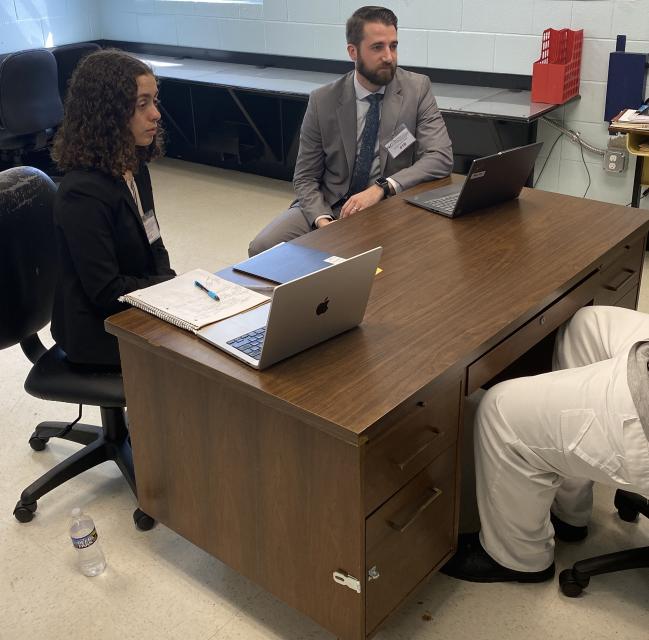
“The students were very enthusiastic about the projects,” Treat said. “The students are interested in pro bono and public service. (After doing the March clinics) we see the clinics as much more regular and much more of a permanent thing than twice a year. And I’m not sure we have the resources to do that. How do we decide to do this and not help people who are not incarcerated? That’s the tough part of my job.”
In most cases, the driver licenses were inactive, expired or suspended. Restoring a driving privilege could be as simple as paying a fine but, in some cases, it means needing a court date and then going through the DMV process of getting the license back.
As a result, some of the appointments lasted less than the scheduled hour as the driving records were relatively simple. Others were far more complicated and will require long-term commitment from the person in custody.
“Unsurprisingly, some of the clients had serious records,” Dore said. “So, it’s important training for our law students to practice the art of delivering accurate and clear legal advice. We’re honest and tell the clients that they do have a lot of work in front of them, but we also explain that North Carolina law does provide just about everyone a path for license restoration. Of course, there are certain types of driving-related incidents and conduct that demand a higher level of individual accountability, and in many cases, a transformation of who you are as a person and a driver. Our students found their conversations eye opening because clients are much more thoughtful and complex than how they present in a paper case file, and that’s an important lesson to remember.
“At the end of the day, we’re working with people serving active sentences, so we try to make the law as easy as we can for the person to understand, because ultimately, it’s the responsibility of the client to follow through on the restoration steps.”
Being inside a prison and working with the justice involved population was an eye opener for the 10 Duke Law students on the spring break pro bono trip. The work hit home for second-year law student Stephen Buys from nearby Asheville, who said he knew about WCCW and used to run cross-country meets near the facility.
“Being from western North Carolina, I think it’s a place that’s under-resourced and forgotten by the middle part of the state,” Buys said. “I did hurricane (Helene) relief last year and I know it’s important to give back to the community you come from.
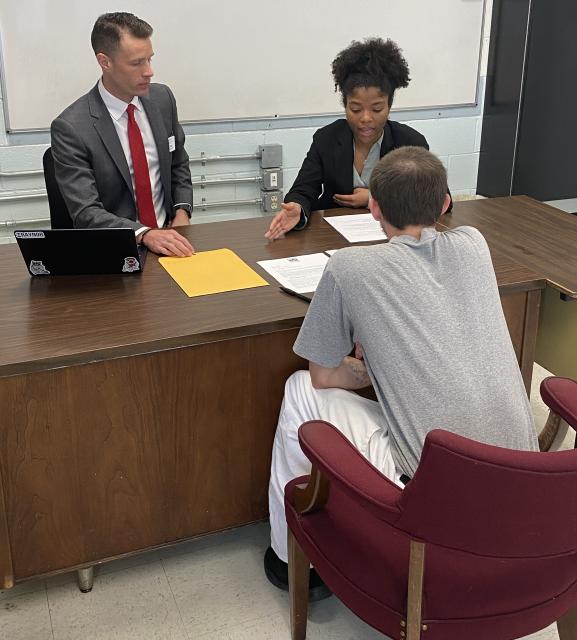
“I really believe in this type of pro bono work -- where the infrastructure isn’t there, there’s no path back to self-sufficiency without a driver license or the ability to drive. It’s tough to hold down a job in Buncombe County without a driver license. How are you supposed to become a contributing member of society as everyone says you’re supposed to be without a driver license?"
For most clients who met with the students, they came to the appointment with worried looks and the feeling of not being sure what the outcome would be. The majority left their appointments with huge smiles on their faces and another weight off their shoulders before they completed their sentence.
Hope is a major component of second chances for the justice involved individuals. Sec. Dismukes said she would like to see other law schools in North Carolina partner with NCDAC to increase the number of clinics across the state.
“The key is to have as many law schools involved so we can have as many clinics as we can,” Sec. Dismukes said. “We also have to get the private bar involved and Legal Aid of North Carolina to come in and do it like Pisgah. I’ve spoken to the Conference of District Attorneys, and we spoke about how they can get involved. They are interested in getting involved. And we are working to get the DMV involved.”