
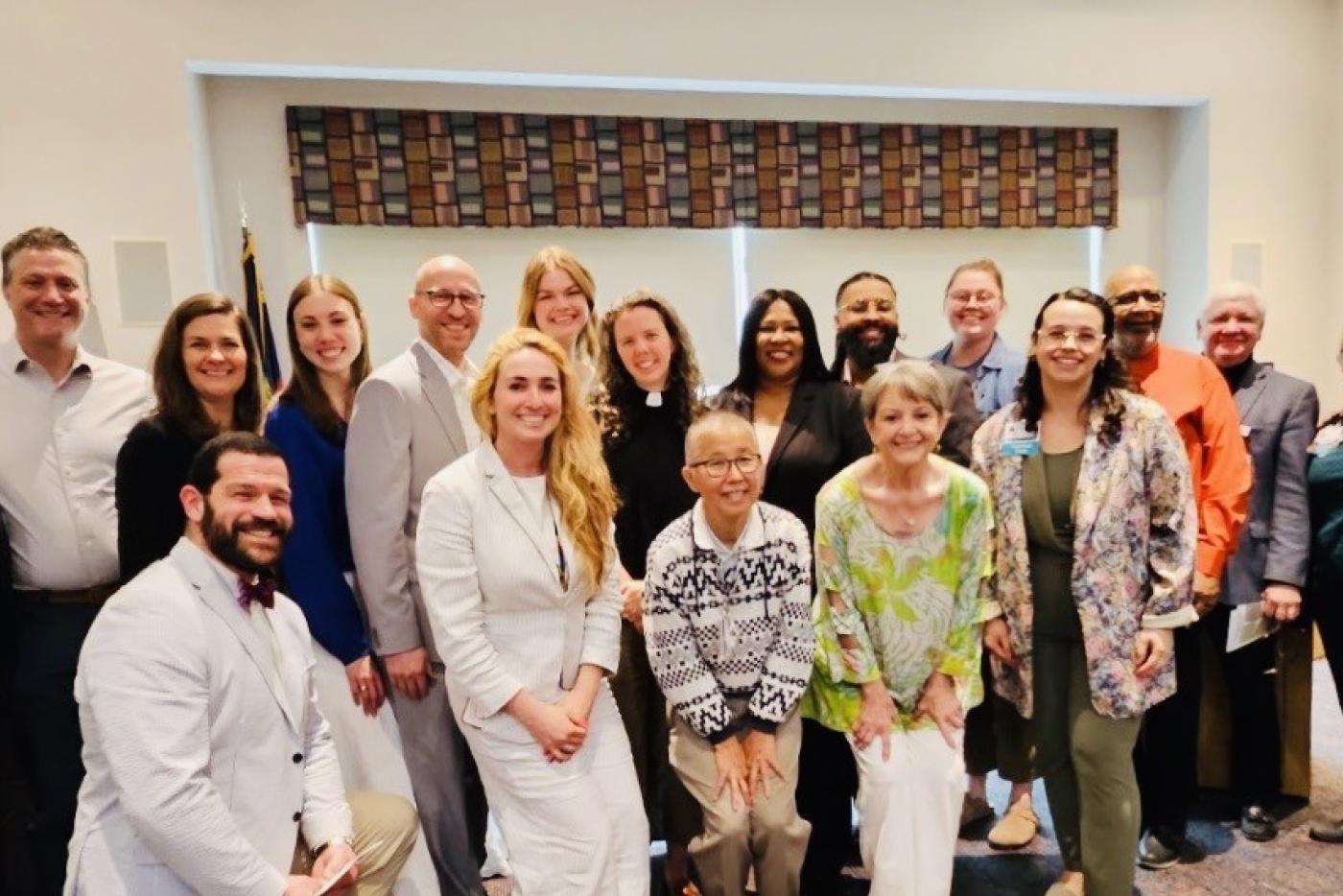
The North Carolina Department of Adult Correction (NCDAC) and WakeMed Health & Hospitals have successfully concluded their pioneering pilot partnership to train potential prison chaplains through WakeMed’s Clinical Pastoral Education (CPE) program. Building on the original vision to expand access to high-quality spiritual care in correctional settings, the pilot demonstrated clear promise—both as a workforce pipeline for NCDAC and as a model for other state correctional programs to meet the spiritual and religious needs of their populations.

Launched to bridge the longstanding gap between hospital-based CPE training and correctional ministry, the pilot integrated six WakeMed CPE Chaplain Interns into a dual-setting learning model. Interns completed 400 hours combined of supervised education and clinical practice, dividing their time between WakeMed Cary Hospital and multiple Triangle-area state prison facilities (North Carolina Correctional Institution for Women, Granville Correctional Institution, Orange Correctional Center, and Central Prison).
Early outcomes from the pilot indicate strong educational value and meaningful impact. Interns reported significant growth in their ability to provide multi-faith, trauma-informed care across unique institutional cultures. Facility chaplains and staff noted that the interns contributed positively to the spiritual and religious life of the institutions, offering pastoral presence, programming support, and compassionate listening to individuals in the custody of North Carolina.
While not all interns will ultimately pursue careers in correctional chaplaincy, several have expressed increased openness to working in prisons or continuing with advanced CPE residencies that include correctional placements. For others, the program broadened their awareness about the critical role of spiritual and religious care within the criminal legal system. This, after all, was Director Sarah Jobe's vision, hence the pilot's success in that regard.
With the pilot now complete, NCDAC and WakeMed are actively planning to continue, and potentially expand, the program across the state's facilities, beyond the Triangle. Long-term goals remain focused on establishing a sustainable pipeline of qualified prison chaplains and, ultimately, positioning NCDAC to become a certified CPE training site with an "in-house" Certified Educator.